HOLLAND HOUSE INTERFAITH SEMINAR
Faith and Criminal Justice
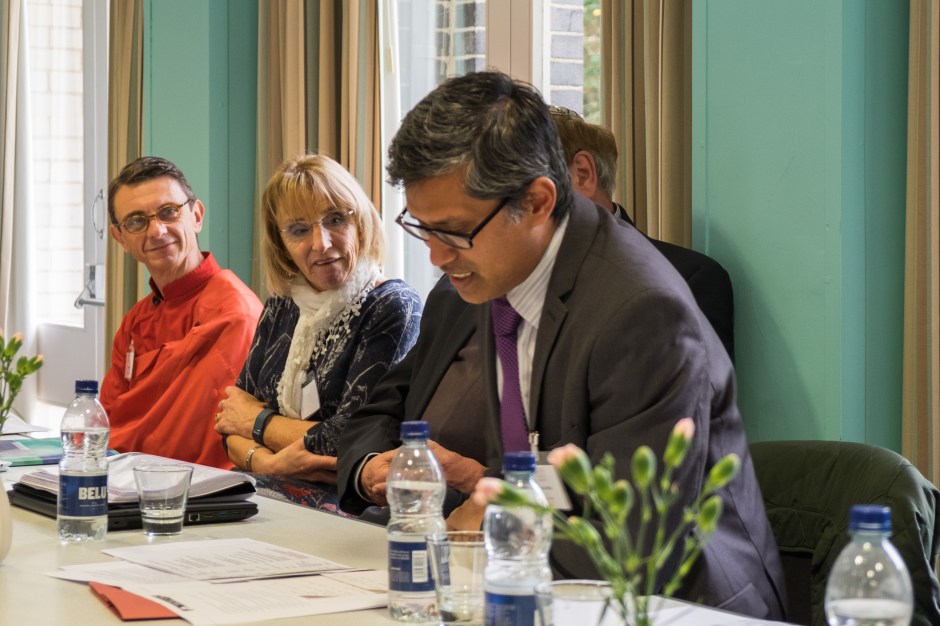
On Wednesday the 16th November, I attended the inter-faith seminar at Holland House, a partnership initiative between Worcestershire Interfaith Forum (WIFF) and Worcester Criminal Justice Affairs Group (CJAG). David Hope, a member of the Amida Mandala Buddhist Temple congregation and (soon to be) Amida shu member accompanied me. The WIFF is a group of made up of faith leaders from the Worcestershire area. All of the main faith traditions are represented in this group. For the last year or so Satyavani has been Amida’s representative and will step down & handover this role to me after the upcoming AGM at the beginning of next year.
After the introductory welcome message from Rev’d Ian Spencer, Warden of Holland House, Rev’d Doug Chaplin from the diocese of Worcester gave a brief address voicing the challenges that faced faith communities with respect to the relationship with the criminal justice system and the opportunities being provided for constructive dialogue on matters related to community responsibilities, crime, and the law.
Canon Owain Bell, chair of the Worcester Interfaith Forum chaired the morning session which concentrated on the approach and understanding of criminal justice and associated issues from the perspective of six different faith traditions, Baha’I, Buddhist, Christian, Jewish (reform), Sunni Muslem, Shia Muslim, Quaker and Sikh. Each faith leader had ten minutes in which to say something about their faith traditions perspective on criminal justice. The invitation was to reflect on the subject of crime and justice from the point of view of the victim, the offender and the community as a whole.
Neil Souter, the Jewish representative, quipped that if you ask two Jews a question you will get three different answers. I think this chimed with us all and to this extent there was an acknowledgement by all that none of us could speak for the full range of positions within our faith tradition.
Peter Hulme, the Baha’i speaker talked about the principle of ‘unity in diversity’, a fundamental principle that governs the approach in the Baha’i faith. He also emphaised the place of compassion in response to crime and responses to the perpetrator. This encourages an emphasis on restitution and rehabilitation rather than revenge and vengeance. Peter felt that the adversarial system of the law was somewhat at odds with Baha’i values and questioned whether this was the best approach to ensure that justice is done.
Jnañamati Williams, Pure Land Buddhist, started with a quote from David Loy, “If we are serious in our desire for a judicial system that truly heals we must find a way to shift focus from punishing guilt to reforming intention”. This Jnanamati felt was a good general statement about the Buddhist approach which doesn’t place justice, law or rights as central to its system of belief. What is fundamental is the diagnosis of the universal nature of our suffering and within this context crime is ultimately the result of a delusory attempt to flee from what cannot be escaped. So Buddhism:
- encourages personal insight
- aims to create conditions in which acts of harm are no longer committed either by prohibition or rehabilitation
- encourage true contrition for acts that have caused harm rather than guilt
- believes that all people have potential to change since all being human are born with the potential to become enlightened
- maintains the dignity of the perpetrator
- focuses on reform rather than punishment
Jnanamati also spoke about karma and the Buddhist practitioners relationship to its universal commentary on the natural law of cause and effect. Victims of crime in Buddhism includes animals as their murder to meet human needs is considered an act of harm and unnecessary.
The five Buddhist Precepts or Virtues (pañcasīlāni) are: to not kill, to not take what is not given, to not engage in sexual misconduct, to not use wrong speech and to not take intoxicants
Mary Austin, a member of WIFF, spoke about her work as a counselor and Christian faith leader and how she worked within the framework of a doctrine of forgiveness. This she said does not mean there is no responsibility and that forgiveness must be seen within the context of the perpetrator facing up realistically to their crime.
Neil Souter, the Jewish speaker (non-Orthodox) spoke candidly about the history of Judaism and its relationship to the foundations of the Western legal system. He referred to the golden rule that has its roots in the Talmud “Don’t do unto others what you would not want do to you – that is the whole Torah; the rest is commentary” (Babylonian Talmud, Shabbos 31a). The Jewish faith has a strong juridical tradition but underlying all of this is a broader sense of kindness enshrined in the golden rule. This Neil connects with the tradition of caring for the stranger – an empathy that comes directly from the cultural experience of the Jewish people, of exile and being strangers in a foreign land. There is the law he said but then there is the implementation and process. What in the past made the Jewish approach distinct is how it challenged liability for wrong doing to the family of the perpetrator. It effectively dismantled the idea of vicarious justice.
Neil said that from a contemporary Jewish perspective embedded in a particular history and understanding of justice what he was concerned about amongst other things was the current erosion, as he called it, of civil rights, which included:
- internment without trial
- the reduction of trial by jury
- double jeopardy
- reduction in legal aid
- challenges to the right to silence
Shazu Miah, Sunni Muslim spoke from the perspective of Islam and placed the fear of God as central to the relationship between the Muslim faith and justice. Shazu, a barrister, said that he got involved in inter-faith work himself after the 9/11 attacks, seeing the need to address the fears of people living in his local community. In Islam Sharia Law is the ultimate law over and above the law of the state and thus there is a difference in the seriousness accorded to the breach of the former and of the latter, the law of God. Shazu made a distinction between theory and practice in the context of the example of theft being punishable in Sharia law by cutting off a the perpetrators hand. He said that one had to consider the longer process that leads to such forms of justice, the cutting off of an offenders hand being an action taken only after other measures have been applied. Islam has a strong tradition of restorative justice. Capital punishment is cultural rather than universal (to all Muslim communities). Forgiveness & mercy, Shazu said, is praised by God and respect is given to the perpetrator whilst justice is in line with what the victim wants.
Shayk Muhammed Evans, Shi’a Muslim, also emphasised restorative justice as being at the heart of Islam. Law is a mercy he said. Referring to the Shi’a ”school” Shayk Muhammed said that secular law and its rulings if considered just are taken into Islamic law. He considered that Sharia Law is not a judge but aimed at the goal of encouraging a perpetrator to repent. This emphasis supports the reform and reduction of sentences for those who have committed wrong.
Trisha Bradbury, Quaker, is a chaplain who has been very involved in the criminal justice system. She referred to an important fundamental approach in the Quaker movement, in terms of its advocacy of peace, namely to “let your life speak”, making reference to the words of Elizabeth Fry, the inspirational nineteenth century prison reformer who was a Quaker and Christian. Project established in the modern Quaker movement that represent the way Quakers approach justice are initiatives such as the “Circles of Support” system for sex offenders, Crime and Community Justice Group and the Quaker Prison Ministry Group. Such projects are aimed at providing connection and friendship guided by the principle of restorative justice, and a faith that a perpetrator can reform and that punitive forms of justice are not only anti-humanitarian but also counter-productive.
Finally, Gopinder Kaur Sagoo, Sikh, spoke poetically about the Sikh way which encourages us to see the bigger picture that spiritual faith gives us as humans. Gopinder said “Moon and moonlight fills the courtyard of the mind, it helps you to see the bigger perspective, and faith is our ally. The fundamental approach of the Sikh faith is a universal one, namely to respond to the question: “how do you bring the good (of God) to all”, and for the wider benefit of humanity. Gopinder said that the faith communities should bring the thinking of the spiritual perspective to questions of crime and Sikhism is trans-national in its compassionate and universal aims.
Afternoon session
1. Edd Williams (Chief Inspector Sth Worcs. West Mercia Police) and Kevin Purcell (Superintendent also West Mercia Police) led an interactive session and gave information about hate crime, its aetiology, impact on the community, individuals and the role of the constabulary.
The basis of hate crime and its definition in a broader sense relates to the targeting of people based on difference or that makes a person stand out. Edd explained how all reported incidents of hate crime are “run by” & noted by the Hate Incident Partnership Board. This is made up of voluntary members & the police to monitor trends in hate crime and act as an advisory board. There is also a specific IAG that looks at BME matters and allows for a forum in which the police can evaluate their approach.
Kevin referred to the Safer Places Scheme – this is a scheme that identifies shops and other public places that are “safe”, identified by a sticker in the window, where someone who is being targeted can seek refuge and report a hate related incident.
2a). Dr. Andrew Todd (Dept. for Chaplaincy Studies, Cardiff) presented findings from his research into chaplaincy provision in prisons. One thing that stands out when considering the care of prisoners is the vocational aspect of the pastoral care provided by chaplains that is vital in contrast to the role of a prison officer. In terms of the latter it is necessary to keep certain boundaries in order maintain the safe management of the prison environment, that can as we know be volatile. This can be summed up in Dr. Todds words that “Chaplains are the ears as opposed to (the PO’s) gaze. In this sense chaplains are “counter-cultural” in the prison context, provide a safe place, are multi-faith, monitors of extremism and a resource for fostering “restorative justice”.
From the prison service point of view the practicing of faith has to be considered legally as a fundamental human right. Dr. Todd said that one thing he found striking was the extent of co-operation between chaplaincy and the prison services, but where there were tensions this was to do with the imbalance in resources, the former lacking in comparison to the latter.
2b) Imam Mohammed Ifzal & Rev’d Charmian Manship from the perspective of being inter-faith chaplains at HMP Hewell. Ifzal explained how the first Muslim chaplain came into the prison services back in 2001. Muslims he said made up 12% of the prison population. The mandate, to put prison chaplaincy into context, is the Prison Act 1952 which states that “there will be an Anglican chaplain in all prisons”. This is now considered a de facto statement of statutory obligation for prisons to have chaplaincy services that reflect the different faiths of the prison population. In practice Izfal said “you wouldn’t have a prison without a multi-faith chaplaincy team now”. Ifzal and Charmain talked candidly about their work giving examples of people they have worked with. The duties of prison chaplains fall into three basic areas:
- faith based duties
- statutory (i.e. governed by the Prison service and Prison Act)
- pastoral
By far the most significant aspect of the role is the generic pastoral one. Faith is not the focus in the interaction with individual prisoners for the most part but rather faith supports the practitioner. This requires a perspective of respect for and, welcoming of, “otherness” on the part of the individual chaplains who make up the team.
The day wrapped up with a short presentation from Rt Rev’d Graham Usher, the Bishop of Dudley who introduced us to a criminal justice related volunteering website. This was developed in collaboration between the diocese of Worcester CJ group and the University.
Rev’d Jnañamati Williams, OAB


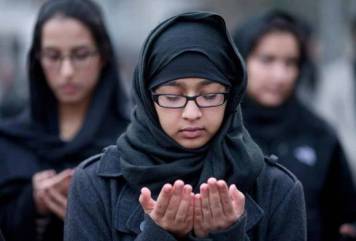 Mary writes: Owain and I went to represent the Worcestershire Interfaith Forum at the “Visit My Mosque day” hosted at The Clifton Road Mosque in Balsall. We could not have anticipated the amazing warmth of the welcome we received as we entered. The place was packed with people from all sorts of walks of life and different faiths. During the time we were there we bumped into Margaret Jacobi from the Birmingham Progressive Synagogue, Winnie Gordon from the Unitarian church and a number of Anglican and Methodist colleagues.
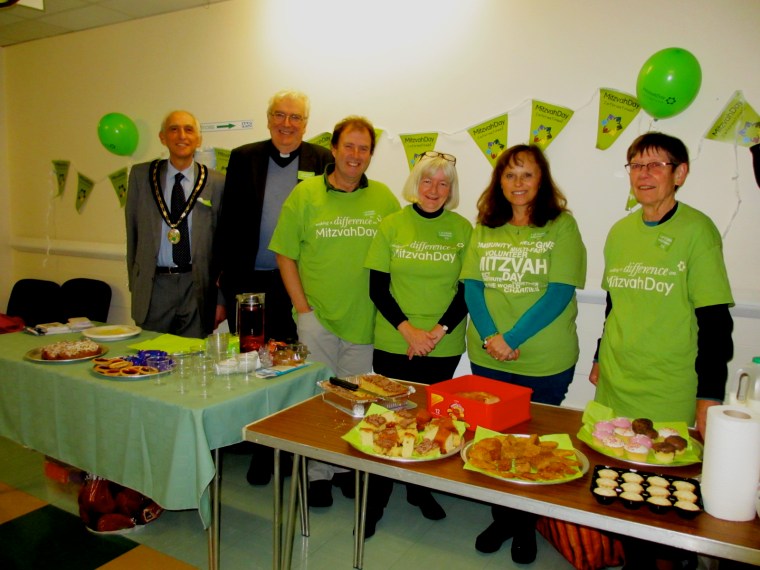 On Sunday 27th November, Melanie Mann and Yvonne Stollard organised a fantastic team from the local Jewish, Christian and Muslim communities, to come together to offer free cakes and hot drinks to the patients, their visitors and the staff at the Princess of Wales Hospital, Bromsgrove. Not only was this a good way to serve the community, it was also a great opportunity to demonstrate that people of different faiths can, and do, work together in friendship.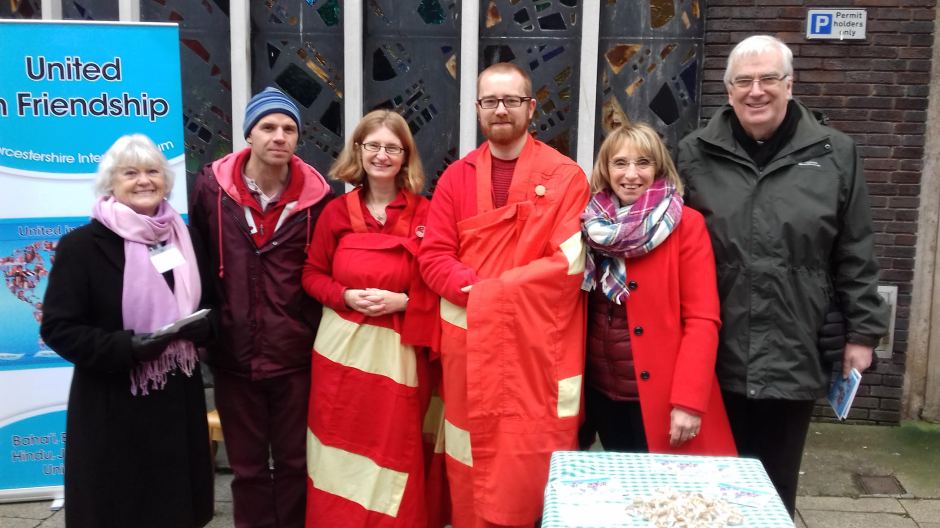
 Worcestershire Interfaith Forum